
Quick answer
To outsource software development safely, choose the engagement model that matches how certain your scope is (fixed scope, time and materials, or a dedicated team), sign an NDA and a contract with an explicit written IP assignment, add a data processing agreement and lawful transfer mechanism under GDPR, UK GDPR or the UAE PDPL, keep code and accounts in your name, and insist on weekly demos.
Key takeaways
- Match the engagement model to scope certainty: fixed scope for well-defined work, time and materials or a dedicated team for evolving products.
- In both the US and UK, a contractor usually owns the copyright in code it writes unless a signed written agreement transfers it to you.
- If the vendor touches personal data, you need a data processing agreement and, for cross-border access, a valid transfer mechanism.
- Keep repositories, cloud accounts, domains and app-store listings in your company's name from day one.
- Weekly demos, a shared backlog and an agreed definition of done are the best early-warning system for a failing project.
Outsourcing software development is now routine for companies of every size, from a London start-up building its first product to a Dubai distributor replacing spreadsheets with a custom system. The talent pool is global, and a good external team can move faster than hiring in-house.
The risks are also well known: code you do not legally own, personal data shipped abroad without safeguards, projects that drift for months before anyone notices. Almost all of them are preventable with the right engagement model, the right contract clauses and a few non-negotiable working practices. This guide sets those out for buyers in the US, UK and GCC.
What Does It Mean to Outsource Software Development?
Outsourcing software development means contracting an external company or team to design, build, test or maintain software that you would otherwise build with employees. The vendor may be in your own country (onshore), a nearby time zone (nearshore) or further away (offshore).
Location matters less than structure. A well-run offshore team with clear ownership terms is safer than a local freelancer working without a contract. What follows applies whichever geography you choose.
Which Engagement Model Should You Choose?
Choose the model by how certain your scope is. Fixed scope suits small, well-defined projects; time and materials suits products whose requirements will evolve; a dedicated team suits long-running work where you want a stable group of developers integrated with your own.
| Factor | Fixed scope (fixed price) | Time and materials (T&M) | Dedicated team |
|---|---|---|---|
| Best for | Clearly specified projects, such as a defined integration or a website rebuild | MVPs and products where priorities change as you learn | Ongoing product development and maintenance |
| Budget predictability | High, if the scope holds | Medium; control it with monthly caps | High per month; total depends on duration |
| Flexibility to change scope | Low; changes need formal change requests | High | High |
| Who carries delivery risk | Mainly the vendor | Mainly the client | Shared; you direct priorities |
| Your management effort | Low during build, high at specification and acceptance | Medium: backlog, reviews, decisions | Highest: you lead the roadmap |
| Main failure mode | Vague specification leading to disputes | Drift without clear priorities | Team idles without product leadership |
A common and sensible pattern is to start with a short fixed-scope discovery phase that produces requirements, designs and an estimate, then move to fixed scope or T&M for the build. If you are scoping a first product, our guide to building an MVP app explains how to keep that first release small.
What Should the Contract Cover?
At minimum, the contract should cover confidentiality, ownership of intellectual property, data protection, acceptance criteria, payment milestones, warranties, termination and handover. The NDA is only the first of these, and on its own it protects very little.
- Non-disclosure agreement (NDA): covers your business information, designs and data, should survive termination and should bind the vendor's staff and subcontractors.
- Scope and acceptance: what "done" means for each milestone, how acceptance testing works and how long you have to raise defects.
- Change control: how new requests are estimated and approved, in writing.
- Subcontracting: whether the vendor may use other parties, and with your prior approval only.
- Warranty and support: a defect-fix period after go-live and the terms of any ongoing support.
- Termination and handover: your right to exit, and the vendor's duty to hand over code, documentation and credentials.
Who Owns the Code When You Outsource Development?
Unless your contract says otherwise in writing, the developer usually owns the copyright in the code it writes, not you. That is true in both the US and the UK, which is why an explicit intellectual property (IP) assignment clause is the single most important term in an outsourcing contract.
In the US, the Copyright Office explains that a commissioned work is only a "work made for hire" if it falls into one of nine specific categories and both parties sign a written agreement saying so. General software built by an independent contractor does not fit those categories, so you need a written assignment of copyright rather than relying on "work for hire" wording alone.
In the UK, the Intellectual Property Office's guidance is similar: an employer owns works its employees create in the course of employment, but a contractor working under a contract for services usually keeps the copyright unless you agree otherwise in writing. Ask for an assignment of all rights on payment, a waiver of moral rights where relevant, and a licence for any pre-existing vendor tools embedded in your product.
In the UAE and wider GCC, take local legal advice on the wording, but the commercial principle is the same: put the assignment in a signed contract, not an email.
How Do GDPR, UK GDPR and the UAE PDPL Affect Outsourcing?
If your vendor can see or process personal data, such as customer records, employee files or production databases, data protection law treats it as your processor and imposes contractual and transfer requirements. The cleanest way to reduce this exposure is to give developers anonymised or synthetic data wherever possible.
UK and EU
Under UK GDPR, the Information Commissioner's Office (ICO) lists the terms a controller-processor contract must contain, including processing only on documented instructions, confidentiality, security measures, prior authorisation of sub-processors, assistance with data subject rights, deletion or return of data at the end, and audit rights. That contract is usually called a data processing agreement (DPA).
If the vendor is outside the UK, giving it access to personal data is generally a "restricted transfer". It must be covered by UK adequacy regulations, an appropriate safeguard such as the International Data Transfer Agreement (IDTA) or the Addendum to the EU Standard Contractual Clauses, or a narrow exception, and when you rely on safeguards you must complete a transfer risk assessment. EU-based companies follow the parallel EU GDPR rules, typically using Standard Contractual Clauses.
United Arab Emirates and the GCC
Onshore UAE businesses are governed by Federal Decree-Law No. 45 of 2021 on the Protection of Personal Data (PDPL), which came into force on 2 January 2022 and sets requirements for cross-border transfer and sharing of personal data. Free zones such as the Dubai International Financial Centre (DIFC) have their own regimes, including DIFC Law No. 5 of 2020. Saudi Arabia and other GCC states have separate laws, so map which law applies to each entity and dataset before sharing anything. As of October 2026, check the current implementing rules with counsel, because regional regimes continue to develop.
United States
The US has no single federal privacy law; obligations come from sector rules and state laws. Whatever applies to you, require the vendor to follow your security policies, restrict production access and notify you promptly of any incident.
How Should You Manage Communication and Time Zones?
Agree a fixed rhythm before work starts: a short daily written update, a weekly demo of working software and a shared backlog you can see at any time. Overlapping working hours matter more than total hours, so agree a daily window when both teams are online.
Gulf working weeks and hours differ from those in the UK and US, and the UK and US shift with daylight saving at different dates, so write the overlap window into the project plan. Decide which channel is for what: a ticketing tool for requirements and bugs, chat for quick questions, and video calls for demos and decisions. Decisions made on calls should be written back into the ticket.
What Does Good Quality Assurance Look Like?
Good quality assurance (QA) is built into every sprint, not bolted on at the end. Ask any vendor to describe, specifically, how code is reviewed, tested and deployed, and ask to see it in action during the first milestone.
- Acceptance criteria written for each feature before development begins.
- Peer code review on every change, using pull requests in your repository.
- Automated tests for business-critical logic such as pricing, tax, payments and permissions.
- A staging environment that mirrors production, where you test before release.
- Continuous integration that runs tests automatically on each change.
- Security basics: least-privilege access, secrets kept out of code, dependency updates and a process for reporting vulnerabilities.
- Release notes and a rollback plan for every deployment.
What Are the Red Flags When Outsourcing Software Development?
The biggest red flags are reluctance to put ownership in writing, refusal to work in your accounts, and a lack of visible progress. Any one of them is a reason to pause.
- The vendor wants to keep the repository, hosting or domain in its own name "for convenience".
- No written IP assignment, or an assignment that only takes effect when the entire project is finished.
- A firm quote with no discovery and no questions about edge cases.
- You only ever speak to sales staff, never to the developers.
- No demo of working software after several weeks.
- Requests for production data with no data processing agreement in place.
- Vague answers on testing, or "we test at the end".
- Unexplained staff rotation, or subcontracting you did not approve.
Agencies that subcontract to other agencies face the same issues in reverse; our guide to white-label Shopify development covers how to structure that relationship. And if you are still deciding whether the software should be built at all, compare options in custom ERP versus off-the-shelf or start smaller with business process automation.
How VEATEX Helps
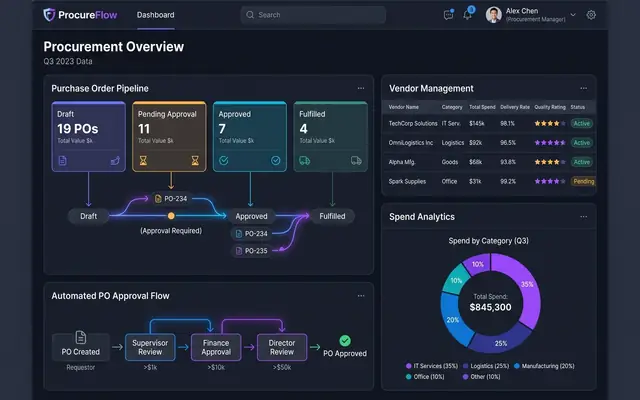
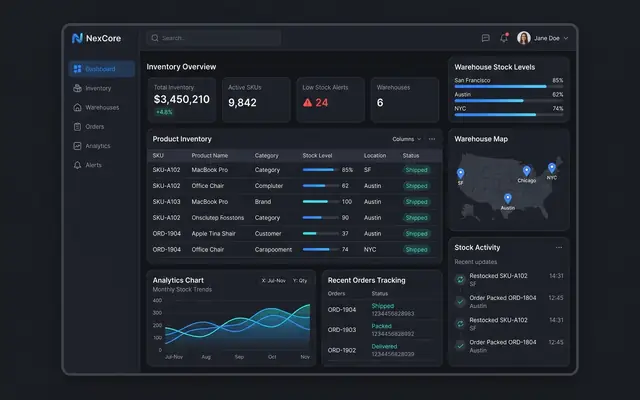
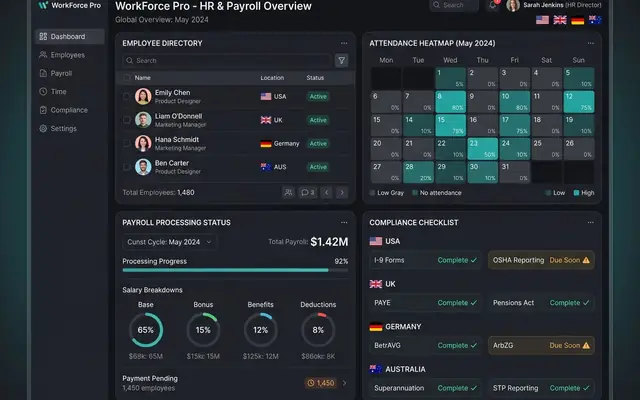
VEATEX is a Shopify, web and software development agency that also builds Peppol e-invoicing platforms for the GCC, working with clients in the US, UK and the Gulf for over 11 years. We work under NDA when you need one, give fixed quotes after scoping, and our clients own what we build for them. Our custom software includes NexCore ERP, FinLedger, WorkForce Pro and ProcureFlow, and we also built a Peppol platform for a client that passed OpenPeppol testing and is now on the UAE pre-approved ASP list. See our custom software development services.
Frequently Asked Questions
Is an NDA enough to protect my software idea?
No. A non-disclosure agreement stops a vendor from sharing your confidential information, but it does not transfer ownership of the code they write. You also need an intellectual property assignment clause in the development contract, a licence-compliance check for open-source components, and practical controls such as keeping the repository in your own account and removing access when the engagement ends.
Fixed price or time and materials: which is safer?
Fixed price feels safer but only works when the scope is genuinely fixed: detailed requirements, designs and acceptance criteria. If requirements are likely to change, fixed price pushes the vendor to cut corners or raise change requests. Time and materials with a capped monthly budget, a prioritised backlog and fortnightly reviews often gives better control for evolving products.
Does GDPR stop me from using a developer outside the UK or EU?
No, but it adds obligations. If the developer can access personal data, that access usually counts as a restricted transfer. You need a lawful mechanism, such as an adequacy decision, the UK International Data Transfer Agreement or Addendum, or EU Standard Contractual Clauses, plus a transfer risk assessment and a processor contract. Using anonymised or synthetic test data reduces the exposure considerably.
Which UAE data protection law applies to outsourced development?
Onshore UAE businesses fall under Federal Decree-Law No. 45 of 2021 on the Protection of Personal Data, which also sets requirements for cross-border transfers. Companies in financial free zones follow their own regimes, such as the DIFC Data Protection Law, DIFC Law No. 5 of 2020, and the ADGM's regulations. Confirm which regime applies to each entity before sharing production data with a vendor.
How do I know if an outsourcing partner is any good before signing?
Ask for a paid discovery or a small first milestone rather than relying on a portfolio. Review real code samples, speak to the developers who will work on your project rather than only the sales lead, and ask how they handle testing, code review and deployments. Check references from clients in your market and with similar complexity, and see how clearly they challenge your requirements.
What should happen at the end of an outsourcing contract?
The contract should require a structured handover: full source code and history in your repository, infrastructure documentation, credentials rotated, environment and deployment instructions, outstanding defects listed and personal data returned or deleted. Plan a short overlap period where your new team or in-house developers can ask questions, and make sure no production system depends on the vendor's own accounts.
Sources
- Works Made for Hire (Circular 30) — U.S. Copyright Office
- Ownership of copyright works — GOV.UK (Intellectual Property Office)
- International transfers: a guide — ICO
- What needs to be included in the contract? — ICO
- Data protection laws — The Official Portal of the UAE Government (u.ae)
Facts checked against the sources above as of 6 Oct 2026. Rules and platform features change, so confirm time-sensitive details before acting.
VEATEX Editorial Team
Written by the strategists, developers and e-invoicing engineers at VEATEX, a Shopify, web and software development agency that also builds Peppol e-invoicing platforms for the GCC, with 1,200+ projects delivered over 11+ years. About us